Soft Things for Hard Seasons

There are seasons of motherhood where a “gift” feels like the wrong word.
Not because care is not welcome. But because the moment itself is so tender, so surreal, so heavy, that anything wrapped in a bow can feel too bright for the room you are standing in.
Pregnancy loss can make time feel strange. The body keeps remembering, even when the world moves on. The nervous system stays braced. And the silence around it can be its own kind of ache.
And if you are here because someone you love is walking through loss, or the NICU, or pregnancy after loss, you might be holding the same question many people carry quietly.
What do I give when I cannot fix this?
If that is you, it makes sense.
This guide is not about finding the perfect thing that makes it better. It is about offering something that says, gently and without pressure:
I see you.
I am with you.
You do not have to carry this alone.
What these gifts are really for
The most meaningful gifts in hard seasons do not try to change the story.
They do something smaller, and often more sacred.
They reduce friction.
They add softness.
They make space for breath.
They offer a place for grief to land without being rushed.
Think of them as companions. Anchors. Small ways of saying “I’m here” when words keep failing.
A gentle note on grief and the nervous system
After loss or trauma, the nervous system can stay on high alert. Even when you are “doing okay,” your body might still be scanning for danger, bracing for another hit, or going numb just to get through the day.
That is why comfort matters. Warmth matters. Simple rituals matter.
Not because they heal grief, but because they help a person live inside their body again, one small moment at a time.
If you are choosing a gift for someone in one of these seasons, the best question is not “What will fix it?”
It is:
What might help her feel a little more held?
Gifts for Pregnancy Loss
For the days that feel quiet, surreal, or painfully normal
Pregnancy loss can be both invisible and all consuming. The world keeps asking you to move forward, and your body keeps holding the truth of what happened.
This section is for gifts that do not rush the grief. They offer softness, warmth, and a way to honor what mattered.
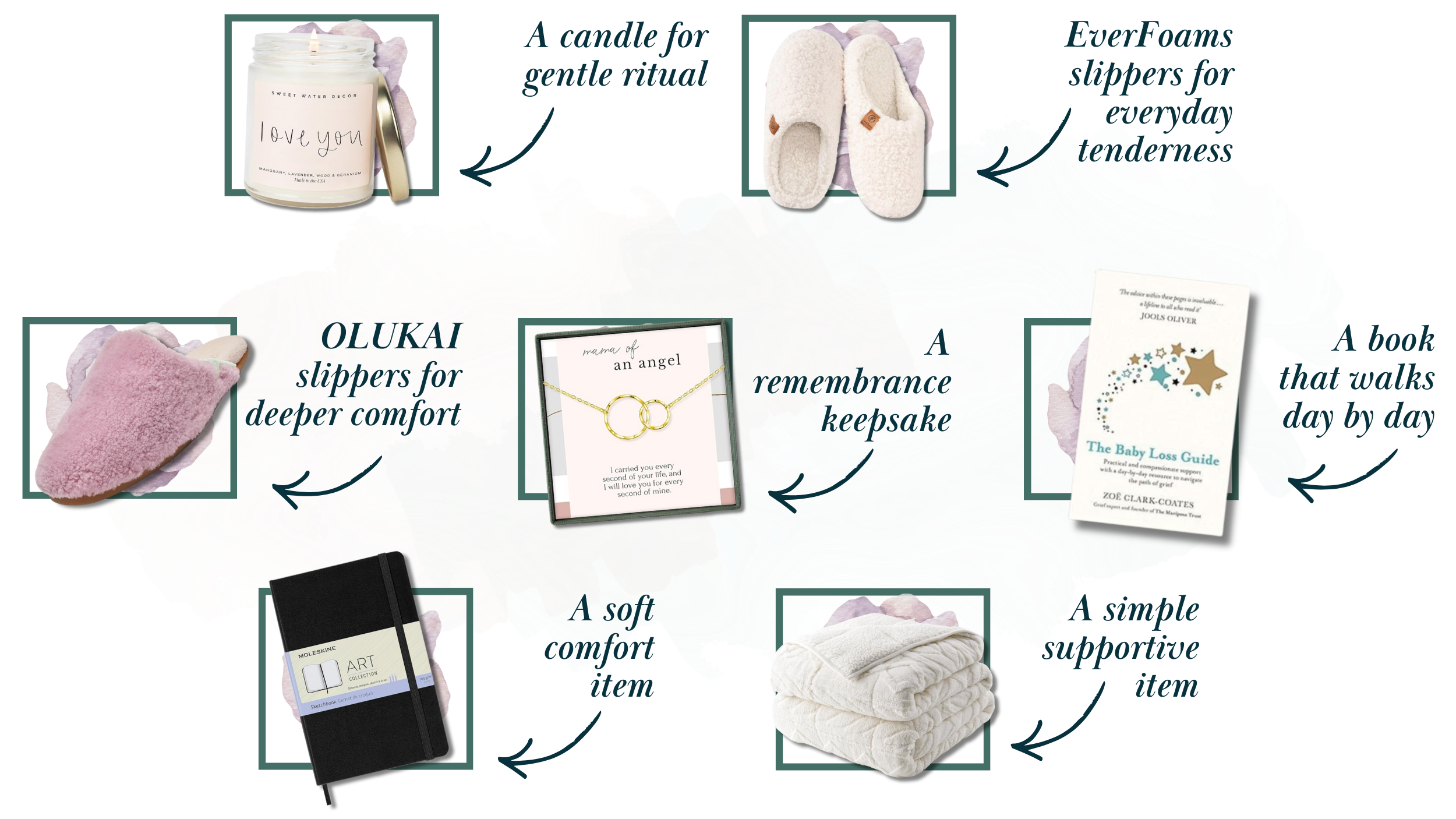
A candle can be a simple way to mark what cannot be explained. Not as a statement, not as a performance, but as a small ritual. Light it when you want to remember. Light it when you cannot stop thinking. Light it when you want the room to feel a little less harsh.
This is especially supportive if she finds comfort in quiet routines.
2) EverFoams slippers for everyday tenderness
After loss, the body can feel both tender and far away. Cozy slippers are not profound, but they are practical comfort. They say: you deserve softness even on days that feel unbearable.
This is a good choice when you want something supportive without asking her to talk about it.
3) Olukai slippers for deeper comfort
If she is the kind of person who feels everything through her body, a more elevated comfort item can be surprisingly grounding. Warmth and softness help the nervous system settle, even slightly, when grief is loud.
This can be a meaningful gift when you want to offer care that gets used, not stored.
Some women want a tangible way to honor the baby they lost. Not to “move on,” but to name the love that existed. A remembrance gift can be a gentle way of saying: your baby mattered, and your grief makes sense.
Only choose something like this if you know she would feel comforted by it.
5) A book that walks day by day
Grief can make it hard to think clearly. A day-by-day guide can offer language when she has none, and companionship when she feels isolated. This is not about advice. It is about being met, one day at a time.
A supportive option if she likes to process through reading.
Choose comfort items that are easy to use and do not require effort. The best ones support rest, warmth, and regulation without asking anything from her.
When a nervous system is tired, ease is everything.
If this item is something soothing, practical, or sensory-friendly, frame it as a “no pressure” support. The goal is not self-improvement. It is comfort. It is one less sharp edge in the day.
Offer it with gentleness, and without expectation.
Gifts for NICU Parents
For the long days, the waiting, and the emotional whiplash
The NICU is a world of alarms, numbers, hope, fear, and exhaustion all living in the same breath. Parents are asked to be present, resilient, informed, and calm while their nervous systems are often doing the opposite.
These gifts are not meant to make the NICU easier. They are meant to offer steadiness, expression, and moments of grounding inside a space that can feel relentlessly clinical.
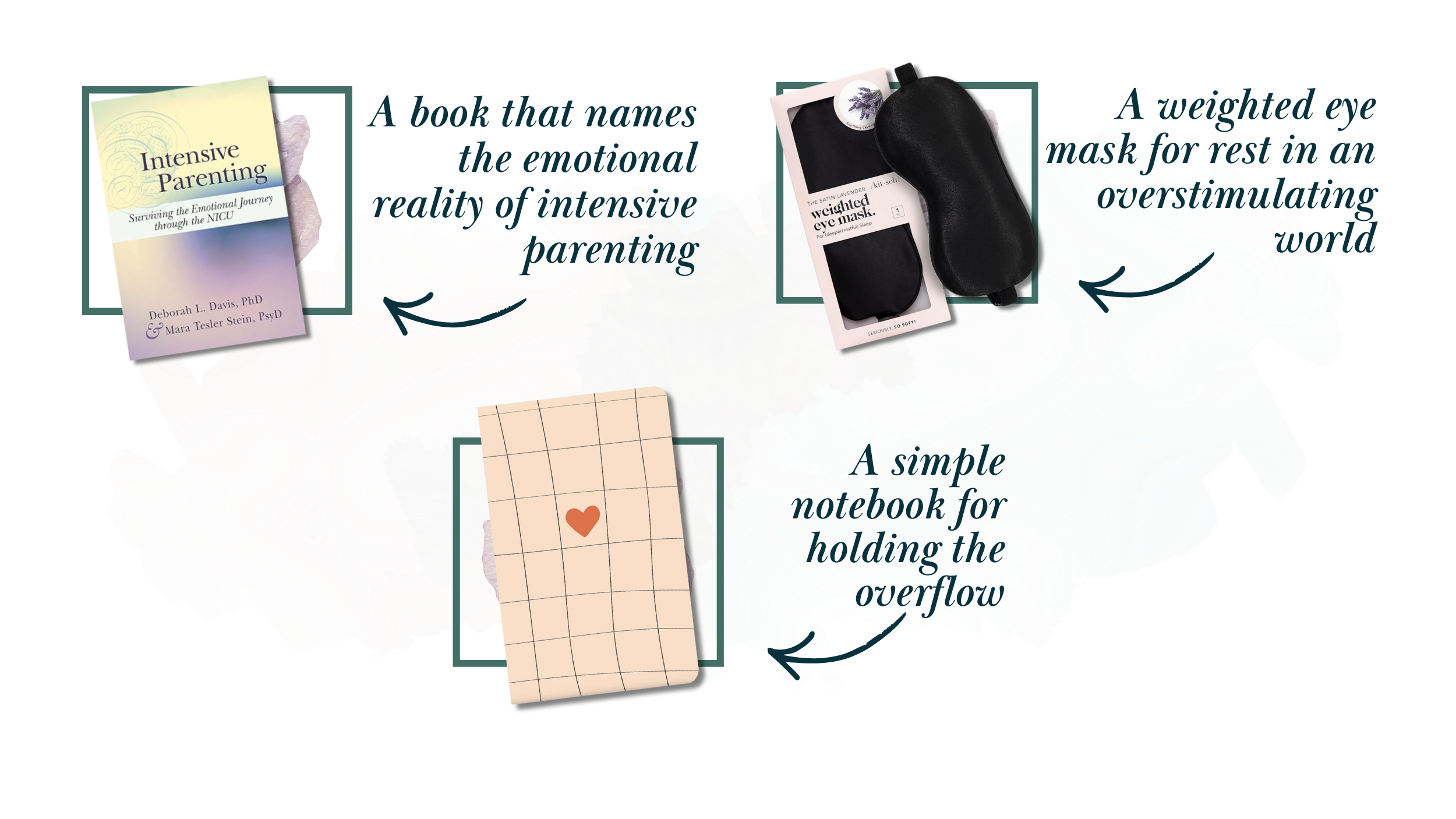
1) A simple notebook for holding the overflow
This is a place to write things down without deciding what they mean yet. Notes from doctors, feelings that surface at 2 a.m., questions that repeat themselves. Writing can help contain the mental noise when everything feels too much.
This is especially supportive for parents who process internally and need a private outlet.
2) A book that names the emotional reality of intensive parenting
NICU parenting can feel isolating, especially when your experience does not match the stories you imagined. This book offers language for the emotional complexity of intensive medical parenting without minimizing it.
This fits parents who want validation more than advice.
3) A weighted eye mask for rest in an overstimulating world
Sleep can be fragile during NICU stays. A weighted eye mask offers gentle pressure and sensory grounding, even during short rest periods. Small moments of regulation can help the nervous system reset.
This is helpful for parents who struggle to shut off their minds.
Gifts for Pregnancy After Loss
For hope that lives alongside fear
Pregnancy after loss is its own emotional landscape. Joy and dread can exist at the same time. Trust can feel risky. The body remembers what happened before, even when everything looks different now.
These gifts honor the tenderness of moving forward while still carrying what came before.
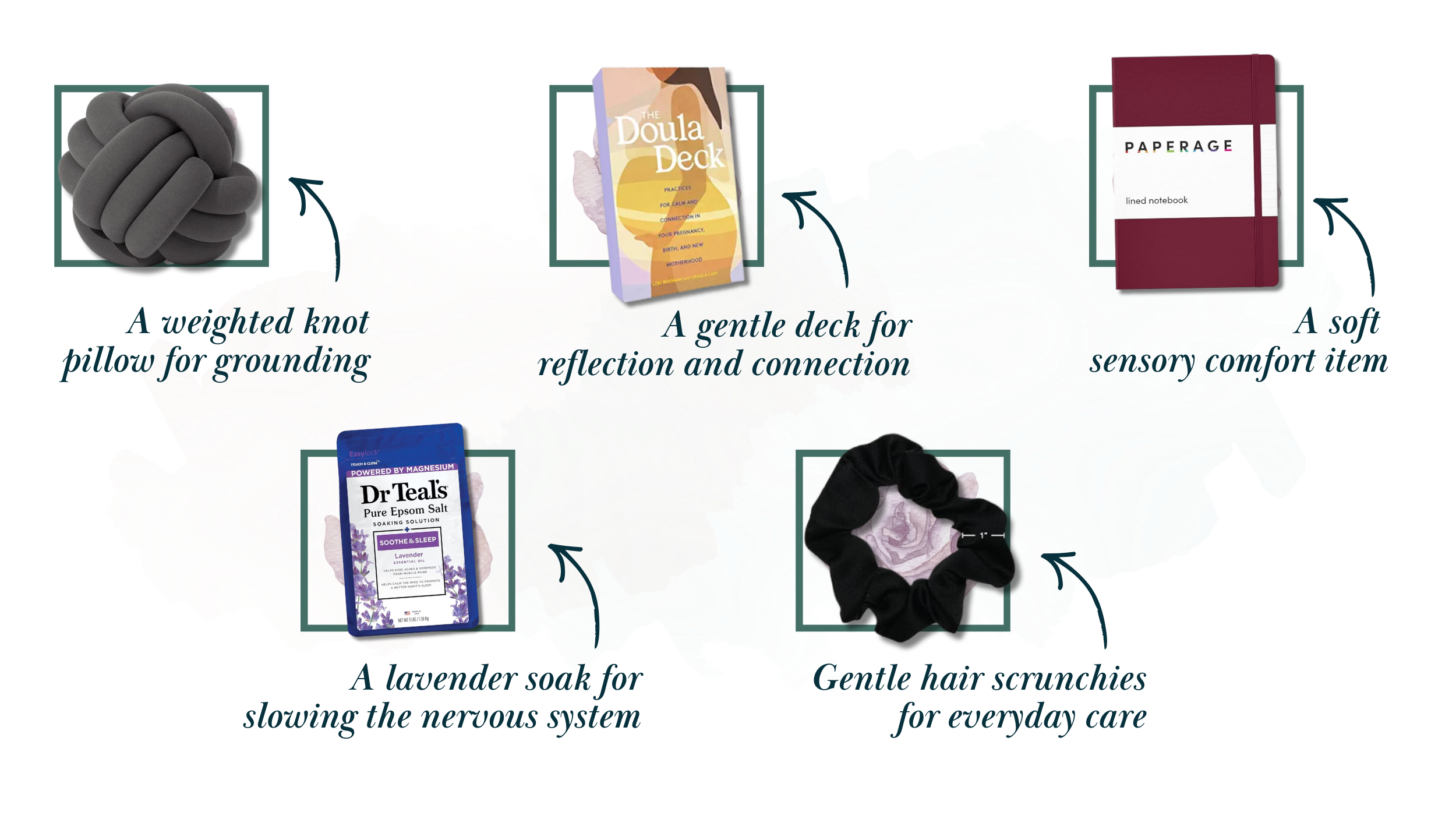
1) A weighted knot pillow for grounding
Deep pressure can be regulating during moments of anxiety or waiting. A weighted pillow offers something to hold when emotions feel big and hard to name.
This fits pregnancy after loss when reassurance needs to be physical, not verbal.
2) A gentle deck for reflection and connection
This deck offers small, reflective practices without demanding positivity or certainty. It invites connection with the present moment rather than forcing reassurance about the future.
This is meaningful for those who want gentle guidance without pressure.
3) A soft sensory comfort item
Pregnancy after loss often comes with constant body scanning. Sensory-friendly items can help redirect attention back into the body in a safer way.
This fits those who feel anxious during waiting periods.
4) A lavender soak for slowing the nervous system
Warm baths can cue the nervous system toward rest when anxiety is high. This soak offers a simple ritual of slowing down, without needing words or processing.
This is helpful for those who feel constantly on edge.
3) Gentle Hair scrunches for everyday care
Small acts of care matter. Gentle scrunchies reduce physical discomfort and can feel like a quiet kindness woven into daily routines.
This fits pregnancy after loss when tenderness extends to the body itself
Why These Gifts Can Help
(The Care Behind the Choice)
Here’s what I’ve learned after years of sitting with women through pregnancy loss, NICU journeys, and pregnancy after loss, both professionally and personally:
These experiences are not just emotional events.
They are nervous system events.
Loss, medical trauma, and prolonged uncertainty change how the body moves through the world. Even when words are hard to find, the body remembers.
Grief does not follow a timeline, and it does not move in straight lines.
The nervous system often stays braced after trauma, scanning for what might go wrong next.
Rest can feel elusive, even when exhaustion runs deep.
Identity shifts can leave women feeling unfamiliar to themselves.
Joy and fear can exist at the same time, especially in pregnancy after loss.
And being asked to “stay positive” can quietly deepen isolation.
On top of all of this, there is the invisible labor of carrying a story that is often minimized or misunderstood. Of showing up in a world that expects gratitude, resilience, or silence when what you are actually holding is grief, fear, or ambivalence.
The gifts in this guide are not meant to fix any of that.
They are not meant to rush healing, force hope, or make sense of something that may never fully make sense.
They are about care.
They are about helping a woman feel a little more anchored in her body.
A little less alone in her story.
A little more supported in moments when words fall short.
When you give a candle, you are not asking her to move on. You are offering a quiet ritual when the world feels too loud.
When you give something soft or warm, you are not treating grief. You are supporting a nervous system that has been through a lot.
When you give a book, a journal, or a reflective tool, you are not offering answers. You are offering companionship.
These gifts say:
I see how much you are carrying.
I am not asking you to be okay.
You matter, exactly as you are.
And sometimes, that is everything.
Frequently Asked Questions About Gifts for Tender Seasons of Motherhood
What are the most meaningful gifts for pregnancy loss?
The most supportive gifts for pregnancy loss focus on comfort, remembrance, and nervous system care, not cheer or distraction. Soft items, gentle rituals, and resources that validate grief often feel more supportive than anything meant to “lift spirits.”
What should I avoid when buying a gift after pregnancy loss?
Avoid gifts that rush healing, minimize grief, or imply a silver lining. Be cautious with anything overly sentimental, prescriptive, or framed around “staying positive.” When in doubt, choose simplicity and tenderness.
Are gifts for NICU parents different?
NICU parents often live in a state of prolonged stress and uncertainty. Gifts that support rest, grounding, and emotional expression are usually more helpful than anything requiring effort, decision-making, or upkeep.
What makes a gift trauma-informed?
Trauma-informed gifts reduce sensory overload, support regulation, honor choice, and do not demand a particular emotional response. They allow the recipient to engage on their own terms, or not at all.
Should I give practical gifts or emotional ones?
Both can be supportive. Practical comfort and emotional meaning are not opposites. The most helpful gifts often blend the two, offering ease while quietly communicating care.
Finding the Right Way to Offer Care
If you’ve made it this far, I want to pause with you for a moment.
Take a breath. A slow one. The kind that doesn’t try to fix anything.
These seasons of motherhood can feel heavy in ways that are hard to explain. There is often grief layered with love, fear layered with hope, and a constant effort to hold yourself together in a world that does not always know how to hold you.
If this guide does anything, I hope it offers permission.
Permission to choose softness.
Permission to move slowly.
Permission to honor what was lost while still living forward.
Permission to give and receive care that meets real life, not expectations.
You are not behind.
You are not broken.
And you do not have to carry your story alone.
Whenever you are ready, support is here.
In gentle forms.
At your pace.